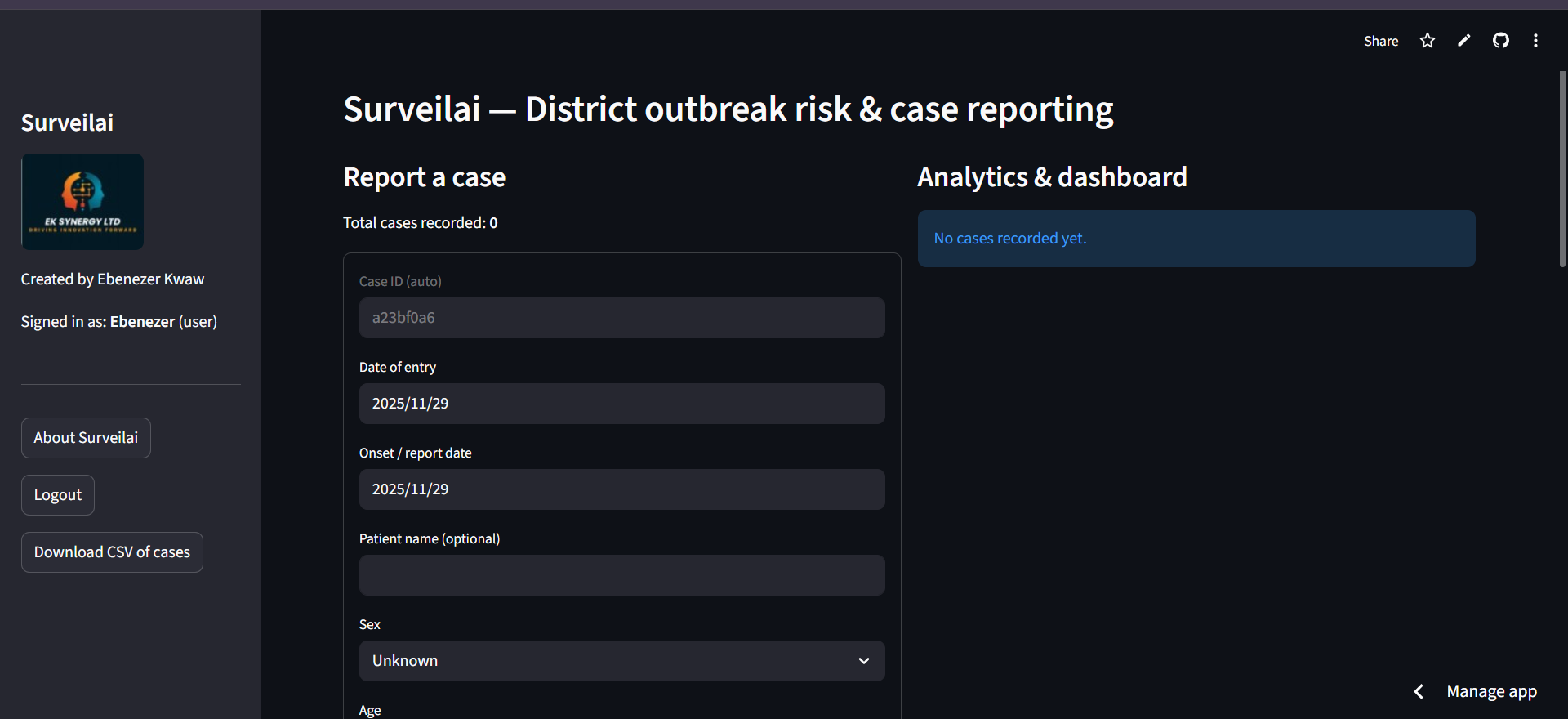
A district-level prototype for case capture, unique identifiers, dashboard summaries and exportable surveillance records.
The challenge
Paper-based and fragmented reporting can delay information flow from facilities to district teams and limit timely analysis.
The strategy
Provide one lightweight workflow for structured case capture, automatic identifiers, real-time summaries and export for further review.
My contribution and execution
- Built a case-reporting form with entry and onset dates and demographic fields.
- Added automatic case IDs and live counters.
- Created summary analytics and CSV export.
- Defined future extensions for databases, alerts, GIS, APIs and machine-learning signals.
Tools and methods
Python, Streamlit, Pandas, CSV storage, GitHub and Streamlit Cloud
Outcome, evidence and limitations
The prototype demonstrates a faster digital workflow, but it does not prove earlier outbreak detection or improved response outcomes. The current source describes CSV storage and future rather than completed DHIMS2 integration.
Why this project matters
This project demonstrates how I translate a practical problem into a structured strategy, prototype or analytical workflow. It also records the limits of the current work and the next validation needed before broader use.
← Back to all insights