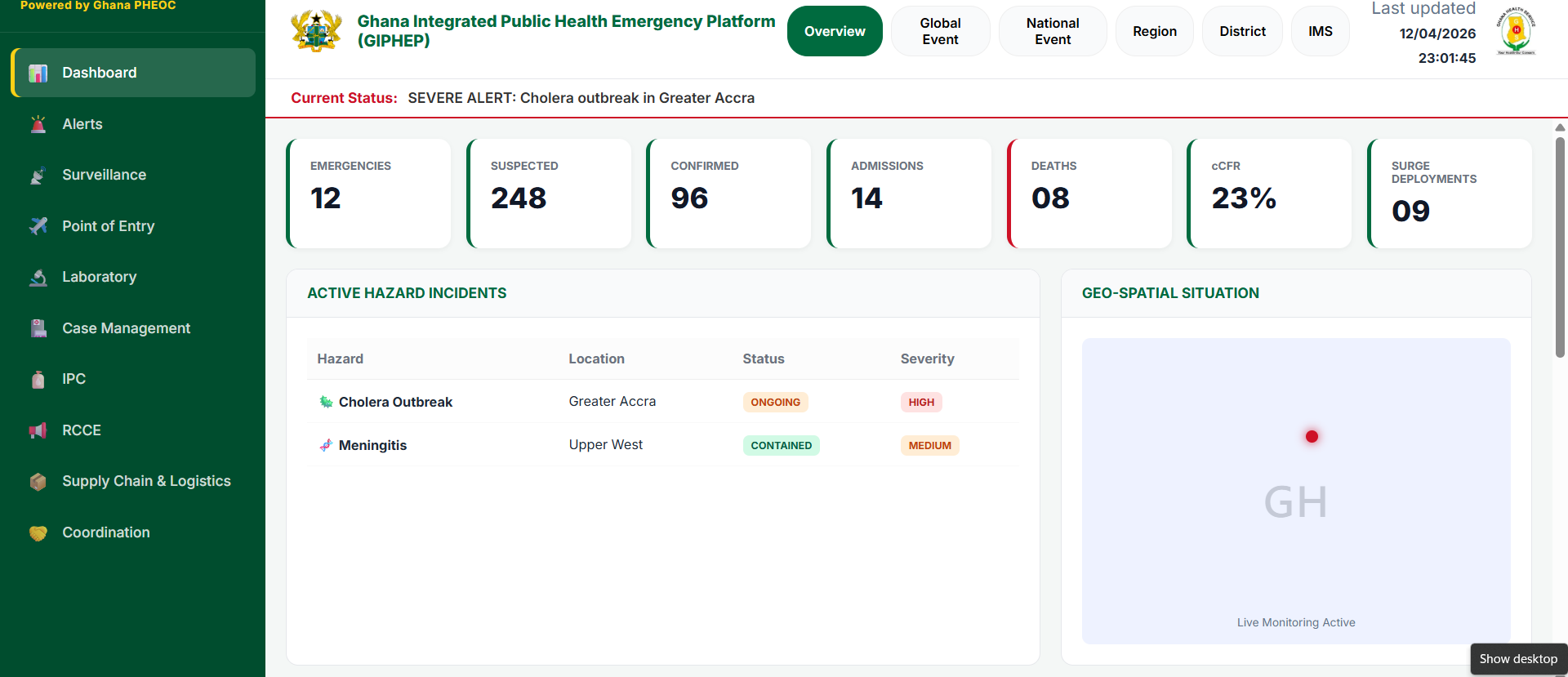
A UI/UX concept for a national public-health emergency intelligence suite supporting surveillance, risk assessment and coordinated response.
The challenge
Fragmented systems, delayed data flow and the absence of a shared operational picture can weaken coordination during public-health emergencies.
The strategy
Design a tiered platform concept connecting data ingestion, analysis, alerts, dashboards and coordinated response views.
My contribution and execution
- Mapped challenges from detection through response.
- Designed concepts for hotspot detection, alerts, system integration and a central dashboard.
- Outlined district, regional and national access levels.
- Included privacy, audit, explainability and data-sovereignty requirements in the design brief.
Tools and methods
UX research, workflow mapping, information architecture, dashboard design and responsible-AI planning
Outcome, evidence and limitations
GIPHEP is a product and interface concept, not a deployed national system. Security, standards alignment, governance and impact statements in the deck are design requirements or expected benefits that require implementation and independent verification.
Why this project matters
This project demonstrates how I translate a practical problem into a structured strategy, prototype or analytical workflow. It also records the limits of the current work and the next validation needed before broader use.
← Back to all insights