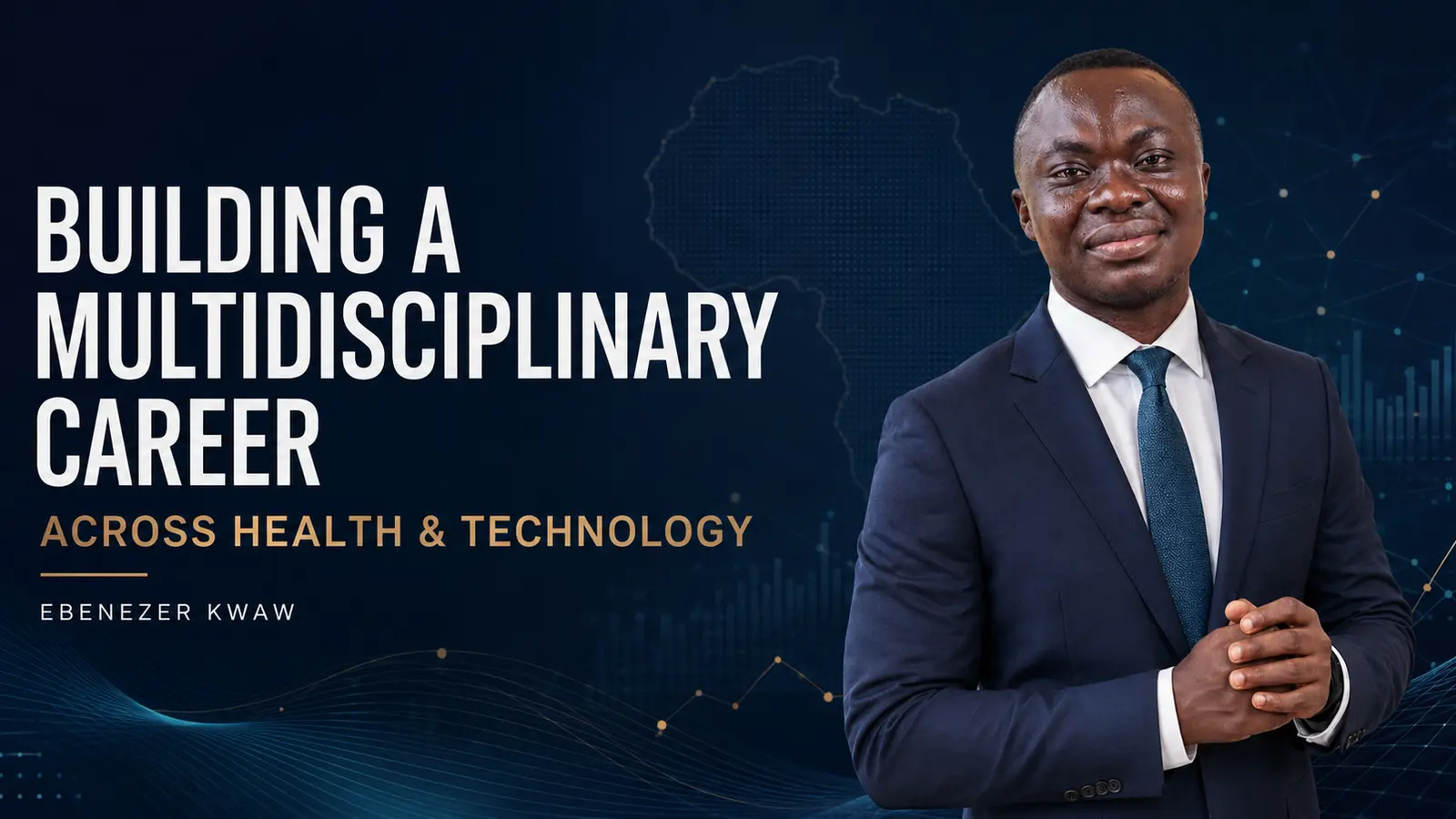
My career began in community nutrition and public health. Over time, my work exposed me to health data, program monitoring, research, digital communication and technology. This experience helped me recognize that the challenges facing health systems cannot always be solved through clinical or public-health knowledge alone. They increasingly require data analysis, digital tools, effective communication and responsible innovation.
This realization led me to begin building a multidisciplinary career across health and technology.
Why health and technology belong together
Public-health professionals regularly work with information. We collect data, monitor indicators, prepare reports, identify service gaps, coordinate interventions and evaluate outcomes.
However, collecting data is not the same as using it effectively.
Important information may remain scattered across spreadsheets, paper records, reporting platforms and departmental reports. Health workers may spend considerable time compiling figures without receiving timely insights that support decisions.
Technology can help close this gap.
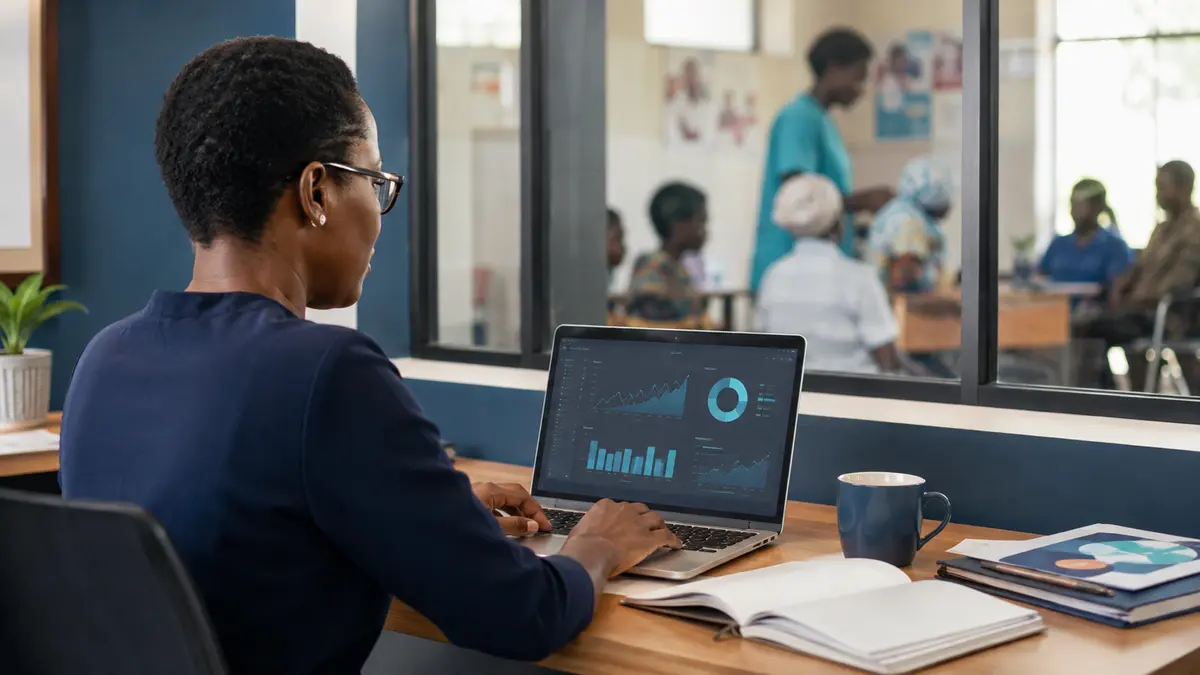
Data dashboards can make trends easier to understand. Predictive models can help identify possible risks. Digital platforms can improve reporting and coordination. Artificial intelligence can support the analysis of large datasets and make complex information more accessible.
Technology is therefore not separate from public health. When designed responsibly, it can strengthen how public-health professionals understand problems, allocate resources, monitor programs and serve communities.
My journey from public health into technology
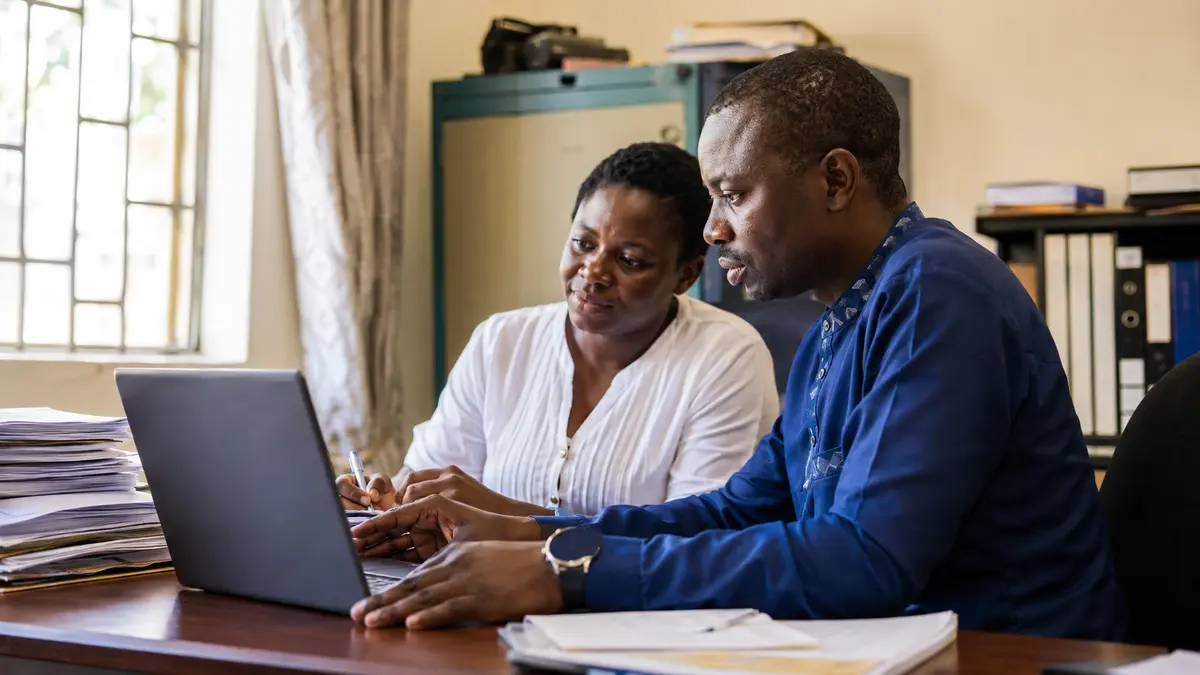
My professional foundation is in community nutrition and public health. Working within Ghana’s health system has given me practical experience in nutrition-program coordination, maternal and child health, monitoring and evaluation, supportive supervision, stakeholder engagement, community education, disease prevention and health reporting.
This work taught me how health programs operate beyond textbooks and policies. It showed me the realities of implementation: limited resources, inconsistent data, competing priorities, reporting demands and the need to coordinate different people and institutions.
As I worked with health information, I became increasingly interested in what could be achieved with better analytical and digital tools.
That interest led me to study data analytics, Python, machine learning, artificial intelligence, cloud technology, software development and digital marketing. I began exploring how these capabilities could be applied to health surveillance, program monitoring, disease-risk analysis, decision-support systems and public communication.
I was not abandoning public health. I was expanding the range of tools I could use to contribute to it.
A multidisciplinary career is more than collecting skills
Learning several subjects does not automatically create a multidisciplinary career. The real value comes from connecting those subjects around a clear purpose.
My public-health experience helps me understand health indicators, implementation challenges, community needs and the responsibilities involved in working with health information. Data analytics allows me to investigate patterns and communicate findings. Software and artificial intelligence offer ways to turn analysis into practical tools. Digital strategy helps make important information visible, understandable and actionable.
The goal is not to become disconnected professionals in several different industries. The goal is to develop a professional identity that uses knowledge from several disciplines to address a defined set of problems.
To use data, technology, communication and public-health experience to strengthen decision-making and improve health outcomes.
The strengths of a multidisciplinary professional
A software developer may know how to build a technically advanced health application but may not fully understand the workflow of a district health office. A public-health professional may understand the problem but lack the technical skills to translate the idea into a digital product. Someone who understands both areas can help connect these perspectives.
A multidisciplinary professional can:
- Translate real-world health needs into technical requirements
- Explain technical concepts to nontechnical decision-makers
- Identify when a digital solution is appropriate and when it is not
- Support collaboration among health professionals, analysts, developers and program managers
- Design tools that fit existing workflows and resource limitations
- Recognize the ethical and privacy implications of health technology
- Connect data collection with practical program decisions
This ability to serve as a bridge may be one of the greatest strengths of a multidisciplinary career.
Challenges involved in crossing disciplines
The first challenge is professional identity. People may find it easier to understand a person with one conventional title than someone working across several areas. A multidisciplinary professional must therefore communicate a clear central mission rather than presenting an unrelated collection of skills.
The second challenge is depth. It is tempting to learn many tools without developing strong competence in any of them. The solution is to build a solid foundation in one domain while developing complementary skills that solve relevant problems.
The third challenge is continuous learning. Health guidance, data standards, software tools and AI capabilities continue to evolve. Working across these fields requires consistent learning and the humility to recognize when specialist support is needed.
There is also the challenge of credibility. A certificate may demonstrate learning, but practical work shows whether a person can apply that knowledge. Building prototypes, analysing realistic datasets, publishing thoughtful articles, contributing to teams and documenting lessons can provide stronger evidence of capability.

How to build a multidisciplinary career intentionally
1. Begin with a core professional foundation
Identify the field in which you possess the strongest education or practical experience. This becomes the foundation from which you explore related disciplines. My foundation is public health and nutrition. Technology extends this foundation; it does not replace it.
2. Start with real problems
Do not learn technology only because it is popular. Begin with problems you have observed: Why do health teams struggle to interpret routine data? How can district-level indicators be visualized more clearly? Can reporting processes be simplified? How can early warning signs be detected faster? How can public-health information be communicated more effectively?
3. Learn transferable capabilities
Programming languages and platforms may change, but analytical thinking, problem definition, data interpretation, research, communication, project management, ethical judgment, stakeholder engagement and continuous learning remain valuable.
4. Build small, relevant solutions
A useful prototype does not need to begin as a national platform. It can start as a dashboard, reporting tool, data-cleaning workflow, risk model, educational resource or simple web application. Small solutions allow you to test assumptions, receive feedback and understand what users genuinely need.
5. Document your thinking
Articles, presentations, demonstrations and case studies can show how you approach problems and attract collaborators who share similar interests. Document the context, reasoning, limitations, ethical considerations and lessons—not only the final product.
6. Learn to work with specialists
Strong solutions often require collaboration with epidemiologists, clinicians, statisticians, software engineers, health-information officers, designers, policymakers and community representatives. Knowing enough to communicate effectively across these groups is often more valuable than attempting to replace every specialist.
7. Remain responsible and evidence-driven
Technology should not be introduced into healthcare simply because it is impressive. Health-related systems must consider data privacy, security, bias, explainability, clinical limitations, local regulations, infrastructure and the possibility of harm. Artificial intelligence should support responsible professional judgment—not replace it without appropriate evidence and oversight.
Building technology for African public-health realities
African health systems present both significant challenges and important opportunities for innovation.
Solutions must account for realities such as limited connectivity, different levels of digital literacy, incomplete data, workforce constraints, fragmented platforms and resource limitations. Technology created without understanding these conditions may look impressive during a demonstration but fail during implementation.
Public-health technology for Africa should be designed with health workers and communities, not merely delivered to them. It should simplify work, integrate with existing systems where possible, protect sensitive information and provide insights that people can act upon.
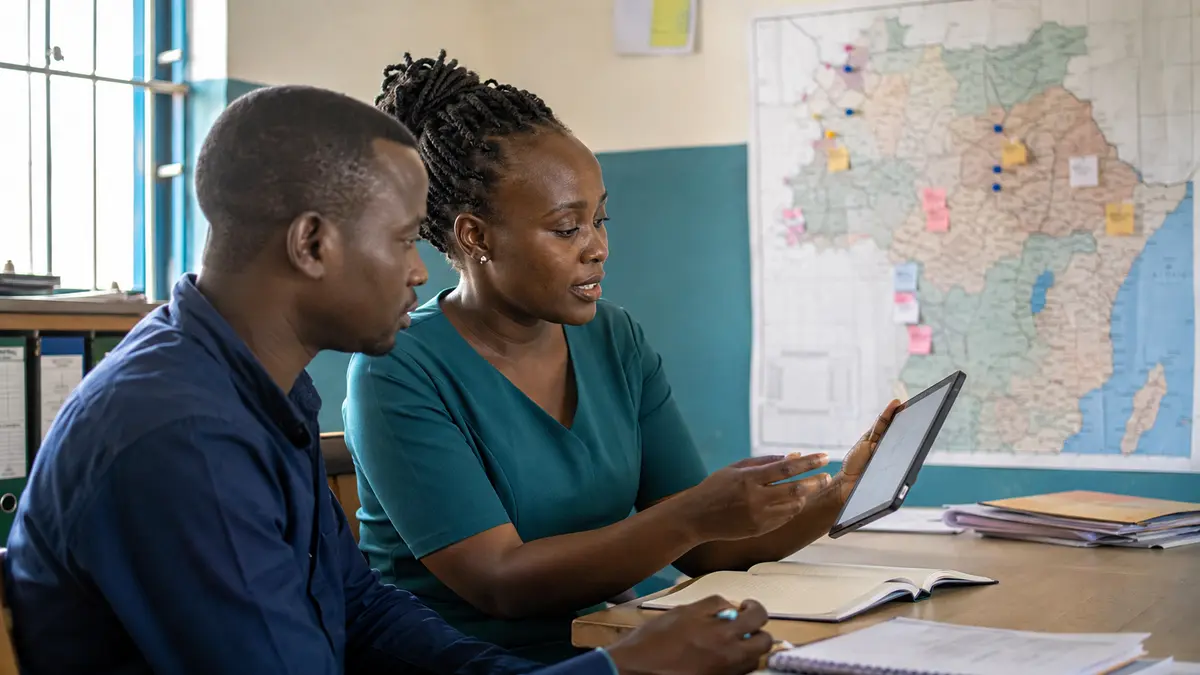
My developing vision for FieldHealth Intelligence is influenced by this principle. The idea is to help public-health officers, health-information teams, program coordinators, monitoring and evaluation professionals, nutrition managers, NGOs and implementing partners transform field data into clearer and more timely intelligence.
The long-term value will not come from the sophistication of the technology alone. It will come from whether the technology helps professionals make better decisions.
Creating a coherent professional identity
A multidisciplinary career becomes stronger when every area of expertise supports one recognizable mission.
I do not see public health, nutrition, research, data, AI, software and digital communication as unrelated careers. I see them as connected capabilities.
Public health helps me understand the problem.
Research and data help me examine the evidence.
Technology helps me develop practical solutions.
Communication helps people understand and use those solutions.
This connection forms the foundation of my professional identity.
Conclusion
The future of work will require more professionals who can collaborate across traditional boundaries. Health systems need people who understand both human needs and technological possibilities. Technology teams need people who understand implementation, ethics, institutions and communities.
Building a multidisciplinary career is not about following every new trend. It is about selecting complementary capabilities and organizing them around a meaningful purpose.
My journey across health and technology is still developing. However, the direction is clear: to help transform health data into useful intelligence, strengthen public-health decision-making and contribute to responsible digital innovation in Africa and beyond.
Let’s continue the conversation.
If you are working in public health, technology, research or digital transformation and see opportunities for collaboration, I would be glad to connect.
Contact Me ↗